In an era where businesses face constant threats—from theft and vandalism to cyber-physical risks—traditional security measures are no longer enough. AI-powered security systems have transformed the way organizations protect their assets, offering continuous, intelligent monitoring that goes far beyond simple surveillance.
What Are AI-Powered Security Systems?
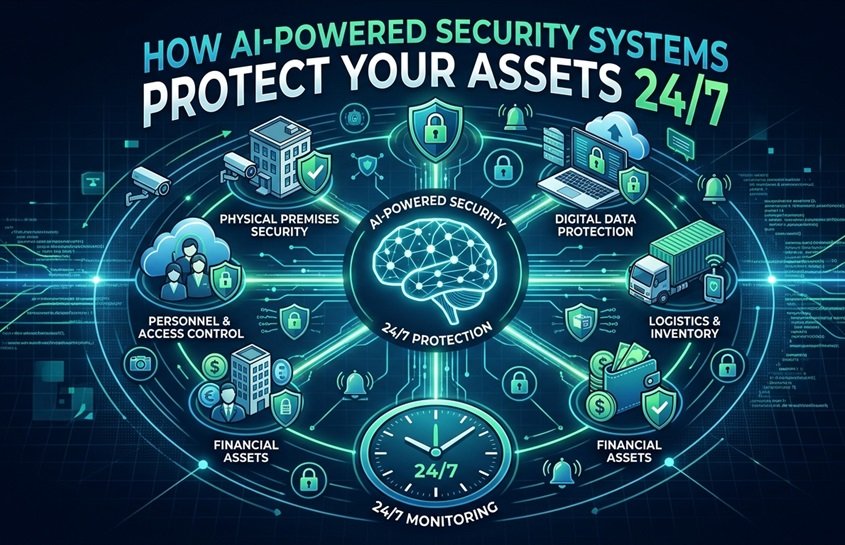
AI-powered security systems combine artificial intelligence, machine learning, and advanced sensor technologies to detect, analyze, and respond to threats automatically. Unlike conventional security setups, which rely on human monitoring or static alarm triggers, AI systems learn patterns of normal behavior, recognize anomalies, and take proactive measures to prevent incidents.
These systems integrate video surveillance, access control, alarms, and analytics into a unified platform, enabling businesses to monitor their assets around the clock with minimal manual intervention.
Core Components of AI Security Systems
1. Intelligent Video Surveillance
AI cameras can analyze video feeds in real time to detect unusual activity, unauthorized access, or suspicious behavior. Features include facial recognition, motion detection, object tracking, and license plate recognition. Alerts are sent instantly to security personnel, ensuring rapid response.
2. Advanced Access Control
AI enhances access management by identifying patterns in user behavior and automatically flagging anomalies. Biometric authentication, mobile credentials, and AI-driven permission adjustments ensure that only authorized individuals enter sensitive areas.
3. Smart Sensors and Alarm Systems
AI-enabled sensors can detect environmental changes, motion, or tampering and communicate directly with security platforms. Unlike traditional alarms, AI systems can filter out false positives, reducing unnecessary disruptions.
4. Centralized Monitoring and Analytics
All security data is integrated into a central dashboard that provides real-time monitoring, automated reporting, and predictive insights. AI analytics can forecast potential threats based on historical data, enabling preventive measures before incidents occur.
How AI Protects Assets 24/7
Continuous Threat Detection
AI algorithms operate around the clock, analyzing multiple data streams simultaneously. This ensures that no activity goes unnoticed, even during off-hours or in remote locations.
Rapid Incident Response
When a potential threat is detected, AI systems automatically trigger alerts, lock doors, activate cameras, or notify security teams. This instant response minimizes damage and reduces downtime.
Reduced False Alarms
Traditional security systems often generate numerous false alarms due to minor disturbances or human error. AI systems differentiate between genuine threats and routine activity, allowing security teams to focus on real incidents.
Predictive Security
By analyzing historical patterns, AI can anticipate risks before they happen. For example, unusual access patterns or repeated security breaches can be flagged early, allowing preventive measures to be implemented.
Benefits for Businesses
- Enhanced Protection: AI continuously monitors assets and responds faster than human personnel alone.
- Operational Efficiency: Automated alerts, analytics, and reporting reduce the need for constant manual monitoring.
- Scalability: AI-powered platforms can grow with your business, supporting multiple locations and complex infrastructures.
- Cost Savings: By preventing incidents and reducing false alarms, AI systems lower security-related costs over time.
- Data-Driven Insights: Businesses gain actionable intelligence on security trends, helping improve policies and procedures.
Industry Applications
AI-powered security systems are versatile and used across multiple industries:
- Retail: Prevent theft, monitor customer behavior, and optimize store layouts.
- Corporate Offices: Secure sensitive areas, monitor employee activity, and manage visitors.
- Healthcare: Protect patients and staff, and monitor restricted zones.
- Education: Ensure campus safety and respond to emergencies efficiently.
- Industrial Facilities: Monitor perimeters, machinery, and hazardous zones to prevent accidents and unauthorized access.
Best Practices for Implementing AI Security
- Assess Your Needs: Identify key assets, vulnerable areas, and compliance requirements.
- Select Integrated Solutions: Choose systems that combine video, access control, sensors, and analytics in one platform.
- Leverage Cloud and Edge Computing: Cloud platforms enable remote monitoring, while edge devices process data locally for faster response.
- Train AI Models Regularly: Update and optimize AI algorithms to adapt to changing environments and behaviors.
- Ensure Ongoing Support: Regular maintenance and monitoring keep systems effective over time.
The Future of AI Security
The evolution of AI in physical security is ongoing. Future trends include:
- Real-time behavioral analysis using deep learning
- Integration with IoT devices for smarter facility management
- Automated emergency response coordination
- Predictive threat modeling across multiple sites
AI-powered systems will increasingly move from reactive solutions to fully proactive security strategies, protecting businesses in ways that were previously impossible.
Conclusion
AI-powered security systems offer unmatched protection for modern businesses, providing continuous monitoring, intelligent analysis, and rapid response. By combining advanced technology with centralized management, these systems ensure that assets, personnel, and operations are safeguarded 24/7.