
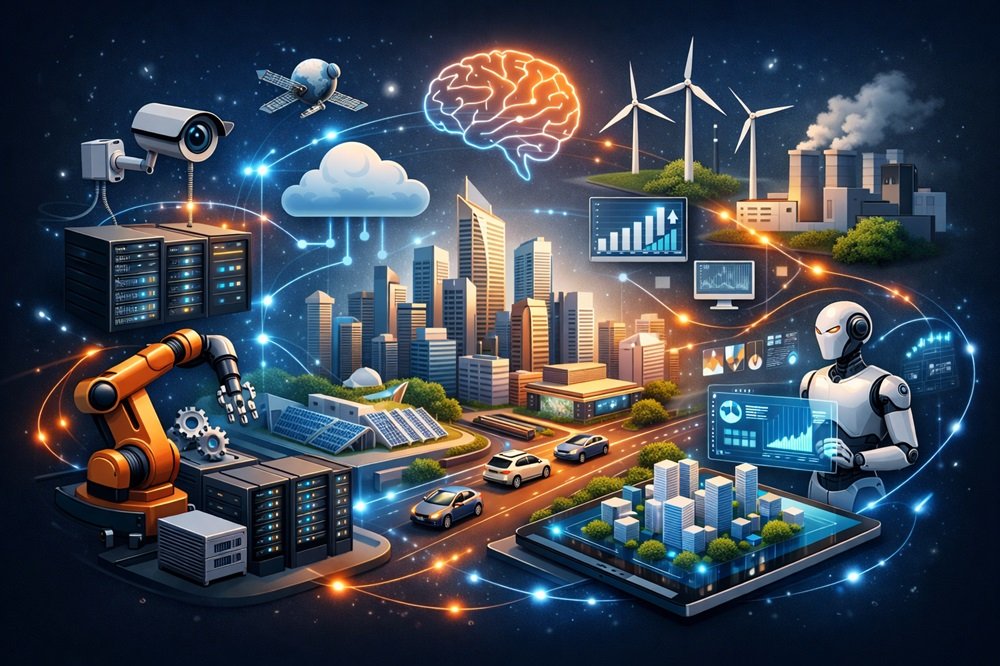
In today’s hyper-connected world, infrastructure is no longer just about physical assets like buildings, networks, or power systems—it’s about intelligent, responsive ecosystems. Smart automation is at the center of this transformation, enabling organizations to operate faster, leaner, and more sustainably.
From data centers and smart cities to industrial facilities and enterprise IT environments, automation is redefining how infrastructure performs, adapts, and scales.
What is Smart Automation in Infrastructure?
Smart automation refers to the integration of advanced technologies—such as Artificial Intelligence (AI), Internet of Things (IoT), machine learning, and robotic process automation—into infrastructure systems to enable autonomous decision-making and optimization.
Instead of relying on manual control, automated systems continuously collect data, analyze it, and take real-time actions to improve performance. This creates infrastructure that is not just functional—but intelligent.
For example, IoT-driven systems connect devices and sensors to create environments where processes self-optimize with minimal human intervention.
Key Technologies Powering Smart Infrastructure
1. Internet of Things (IoT)
IoT forms the backbone of smart automation by connecting sensors, machines, and systems. These devices collect real-time data, enabling infrastructure to “sense” and respond dynamically.
- Smart cities use IoT to manage traffic, reduce congestion, and optimize utilities
- Industrial plants use IoT sensors for predictive maintenance
- Buildings use IoT for energy-efficient lighting and HVAC control
2. Artificial Intelligence & Machine Learning
AI enables systems to learn from data and make predictive decisions. This allows infrastructure to move from reactive to proactive operations.
- Predict equipment failures before they occur
- Optimize energy usage patterns
- Improve system reliability and uptime
3. Building Management & Automation Systems (BMS/BAS)
Modern buildings use centralized platforms to control lighting, HVAC, security, and energy systems.
These systems:
- Reduce energy consumption
- Improve occupant comfort
- Enable centralized monitoring and control
Smart buildings leverage automation and real-time data analytics to optimize operations and reduce costs.
4. Cloud & Converged Infrastructure
Cloud-based and converged infrastructure combine computing, storage, and networking into unified systems.
This allows:
- Centralized management
- Scalability on demand
- Automated resource allocation
Automation in converged systems enhances efficiency by pooling resources and reducing manual intervention.
How Smart Automation Improves Infrastructure Efficiency
1. Energy Optimization and Sustainability
One of the most immediate benefits of automation is reduced energy consumption.
- Smart lighting adjusts based on occupancy
- HVAC systems adapt to real-time conditions
- Energy systems balance load automatically
Automated buildings significantly cut energy usage and environmental impact by optimizing operations in real time.
In some cases, integrated automation systems can reduce overall energy consumption by up to 20%.
2. Predictive Maintenance and Reduced Downtime
Traditional maintenance is reactive—fixing things after they break. Smart automation shifts this to predictive maintenance.
- Sensors detect early signs of equipment failure
- Systems trigger alerts or automatic interventions
- Maintenance becomes scheduled and efficient
This reduces downtime, extends asset lifespan, and lowers operational costs.
3. Real-Time Monitoring and Decision-Making
Automation enables infrastructure to respond instantly to changing conditions.
- Real-time dashboards provide operational insights
- Automated alerts prevent system failures
- Decisions are data-driven, not guesswork
Systems like SCADA convert field data into actionable intelligence, improving performance and efficiency.
4. Process Automation and Productivity Gains
Smart automation eliminates repetitive manual tasks.
- Automated workflows handle routine operations
- AI-driven systems process large datasets instantly
- Human resources focus on strategic activities
This improves productivity while reducing errors and operational delays. Intelligent automation also enhances accuracy and scalability across processes.
5. Cost Reduction and ROI
Automation delivers measurable financial benefits:
- Lower energy bills
- Reduced labor costs
- Fewer system failures
- Optimized resource utilization
For example, automated data integration systems can deliver up to 271% ROI with significant efficiency gains.
Similarly, automation technologies like smart contracts can reduce operational costs by around 30% in certain industries.
6. Scalability and Flexibility
Modern infrastructure must handle rapid growth and changing demands.
Automation enables:
- Easy scaling of resources
- Dynamic workload management
- Faster deployment of new services
This is especially critical as data volumes grow exponentially across industries.
Real-World Applications of Smart Automation
Smart Buildings
Automated systems manage lighting, HVAC, and security to maximize efficiency and comfort.
Smart Cities
- Intelligent traffic systems reduce congestion
- Automated water systems minimize waste
- Smart grids optimize electricity distribution
Industrial Automation
Factories use robotics and AI to streamline production and reduce downtime.
Data Centers
Automation ensures:
- Efficient cooling and power distribution
- Workload optimization
- Minimal human intervention
Challenges in Implementing Smart Automation
Despite its advantages, adoption comes with challenges:
- High initial investment
- Integration complexity across legacy systems
- Cybersecurity risks due to increased connectivity
- Skill gaps in managing advanced technologies
Organizations must carefully plan infrastructure design to ensure compatibility, scalability, and long-term efficiency.
The Future of Smart Infrastructure
Smart automation is evolving rapidly with emerging technologies:
- Edge computing for faster local processing
- Digital twins for real-time simulation and optimization
- Autonomous infrastructure systems requiring minimal human input
As automation technologies mature, infrastructure will become increasingly self-managing, adaptive, and intelligent.
Conclusion
Smart automation is no longer optional—it is essential for modern infrastructure. By integrating IoT, AI, and advanced analytics, organizations can transform their operations from reactive systems into intelligent ecosystems.
The result is a powerful combination of:
- Higher efficiency
- Lower costs
- Greater reliability
- Improved sustainability
As businesses and cities continue to digitize, smart automation will be the key driver shaping the infrastructure of the future.