
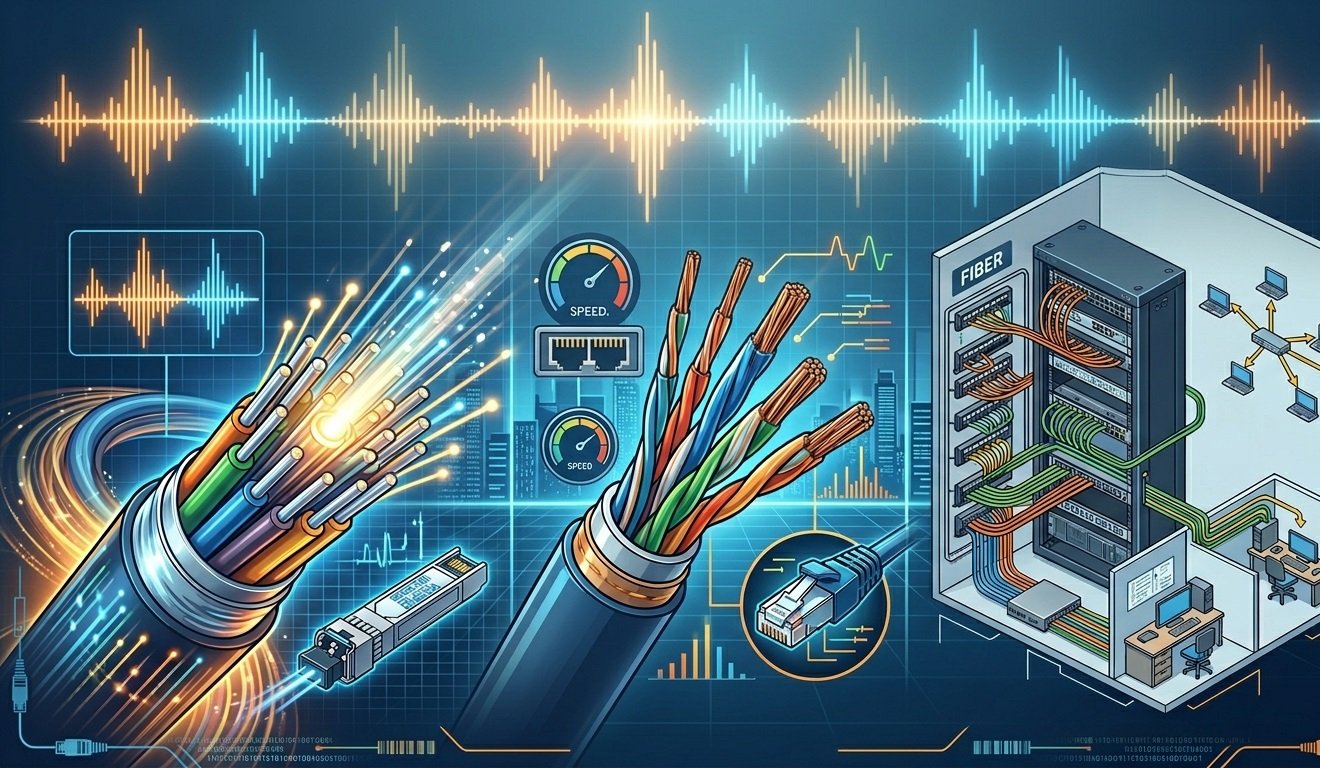
In the modern digital era, a strong and well-designed cabling infrastructure is the backbone of every organization’s IT network. Whether it’s a corporate office, data center, or industrial facility, structured cabling systems ensure seamless connectivity, high performance, and scalability.
This comprehensive guide explores the fundamentals, differences, and best practices for fiber optics, copper cabling, and structured cabling infrastructure—helping businesses build reliable and future-ready networks.
1. What is Structured Cabling?
Structured cabling is a standardized system of cabling and components used to support multiple hardware uses and communication systems within a building or campus.
Key Characteristics:
- Organized and standardized layout
- Supports voice, data, video, and security systems
- Scalable and flexible for future upgrades
- Reduces downtime and simplifies troubleshooting
A structured approach eliminates messy, point-to-point wiring and replaces it with a clean, modular system.
2. Components of Structured Cabling System
A complete structured cabling system consists of six main components:
1. Entrance Facilities
Where external service provider connections enter the building.
2. Equipment Room
Centralized space for servers, switches, and core networking equipment.
3. Backbone Cabling
Connects different floors or buildings (often uses fiber optics).
4. Telecommunications Room (TR)
Intermediate distribution points for horizontal cabling.
5. Horizontal Cabling
Connects telecom rooms to end-user work areas.
6. Work Area Components
End devices like computers, IP phones, and access points.
3. Fiber Optic Cabling
Fiber optic cables use light signals to transmit data, making them the fastest and most reliable option for modern networks.
Types of Fiber:
Single-Mode Fiber (SMF)
- Long-distance communication (up to kilometers)
- High bandwidth and low attenuation
- Used in ISPs, telecom networks, and large campuses
Multi-Mode Fiber (MMF)
- Shorter distances (up to a few hundred meters)
- Cost-effective for data centers and LANs
Advantages of Fiber:
- Extremely high speed (10Gbps, 40Gbps, 100Gbps+)
- Low signal loss over long distances
- Immune to electromagnetic interference (EMI)
- Enhanced security (harder to tap)
Limitations:
- Higher installation cost
- Requires skilled handling and termination
4. Copper Cabling
Copper cabling remains widely used for LAN connectivity due to its affordability and ease of installation.
Common Types:
Cat5e
- Supports up to 1 Gbps
- Suitable for small networks
Cat6
- Supports up to 10 Gbps (short distances)
- Better shielding and performance
Cat6a
- 10 Gbps up to 100 meters
- Reduced crosstalk
Cat7 / Cat8
- Higher performance with shielding
- Used in data centers and high-speed environments
Advantages of Copper:
- Cost-effective
- Easy installation and maintenance
- Supports Power over Ethernet (PoE)
Limitations:
- Limited distance (typically 100 meters)
- Susceptible to EMI and interference
- Lower bandwidth compared to fiber
5. Fiber vs Copper: Key Differences
| Feature | Fiber Optic | Copper Cabling |
|---|---|---|
| Speed | Very High (100Gbps+) | Moderate (1–10Gbps) |
| Distance | Long (kilometers) | Short (up to 100m) |
| Interference | Immune | Susceptible |
| Cost | Higher | Lower |
| Installation | Complex | Easier |
| Security | More secure | Less secure |
Conclusion:
- Use fiber for backbone and long-distance connections
- Use copper for horizontal and endpoint connectivity
6. Structured Cabling Standards
Following international standards ensures performance, compatibility, and reliability.
Key Standards:
- ANSI/TIA-568 (Commercial Building Cabling)
- ISO/IEC 11801 (International cabling standard)
- TIA-942 (Data center infrastructure)
These standards define:
- Cable types and categories
- Installation practices
- Performance requirements
7. Best Practices for Cabling Infrastructure
📌 Proper Planning
- Conduct site surveys
- Design for future scalability
📌 Cable Management
- Use trays, racks, and labeling systems
- Maintain proper bend radius
📌 Separation of Cables
- Keep power and data cables separate
- Avoid interference
📌 Testing & Certification
- Use cable testers to verify performance
- Ensure compliance with standards
📌 Documentation
- Maintain accurate diagrams and labeling
- Helps in maintenance and troubleshooting
8. Role in Data Centers
Structured cabling plays a critical role in modern data centers by enabling:
- High-speed data transmission
- Efficient airflow and cooling
- Easy scalability and upgrades
- Reduced downtime
Common Data Center Solutions:
- Pre-terminated fiber systems
- High-density patch panels
- Fiber raceways
- Cable management systems
9. Future Trends in Cabling Infrastructure
🔹 High-Speed Fiber Adoption
Growing demand for 100G/400G networks
🔹 Smart Cabling Systems
Integration with monitoring tools
🔹 Modular Infrastructure
Pre-engineered solutions for faster deployment
🔹 IoT & PoE Expansion
More devices powered via Ethernet
10. Conclusion
A well-designed fiber, copper, and structured cabling infrastructure is essential for building a fast, reliable, and scalable network. While fiber optics deliver unmatched speed and long-distance performance, copper cabling remains a practical solution for end-user connectivity.
By combining both technologies within a structured framework, organizations can create a future-ready network infrastructure that supports business growth, digital transformation, and emerging technologies.